Wat Suan Dok: Chiang Mai's Flower Garden Temple
The "Flower Garden Temple" west of the Old Town — a dazzling cluster of white royal chedis that's magic at sunset, with Doi Suthep rising behind.
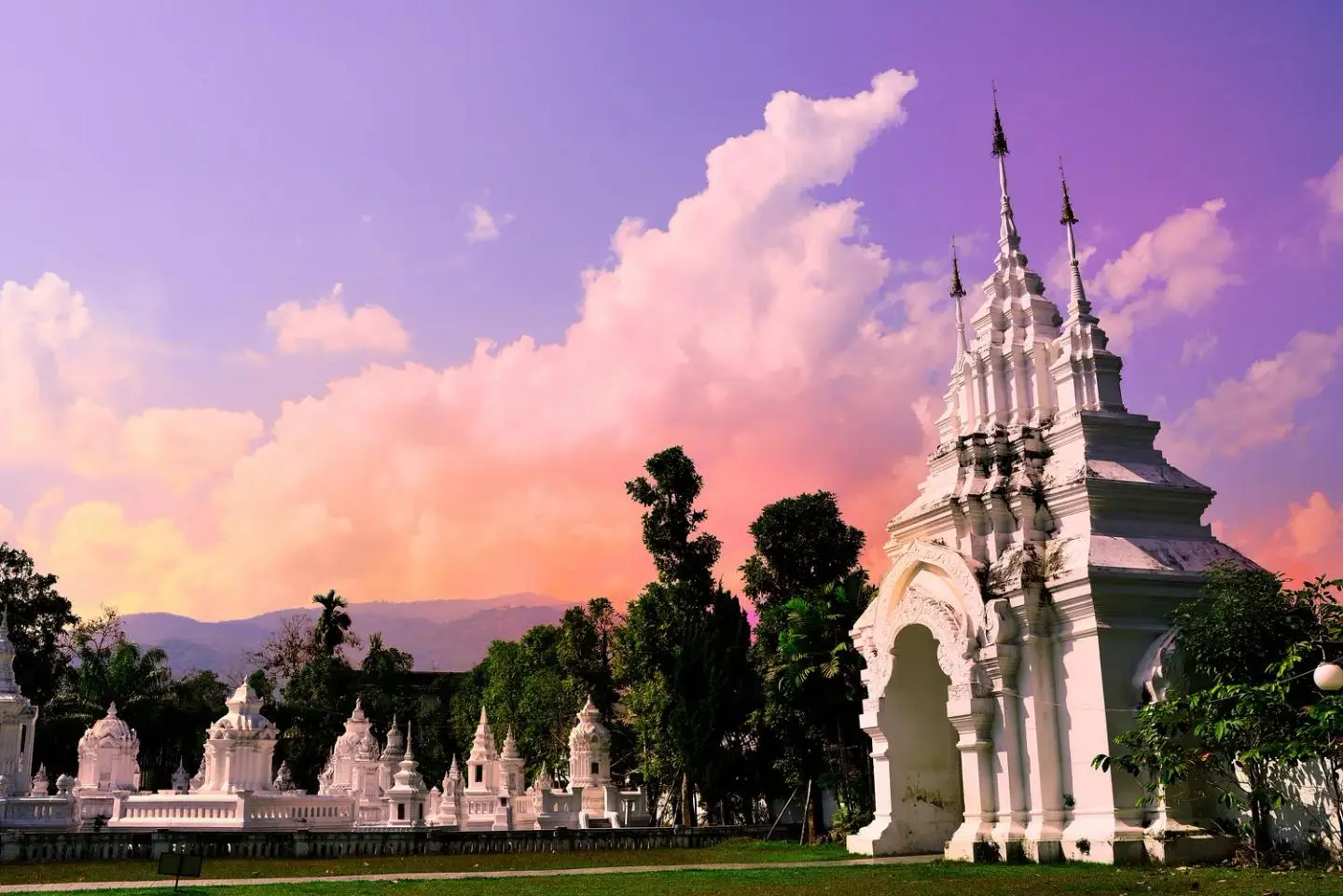
The white royal chedis of Wat Suan Dok at sunset. Photo: Piyamis / Wikimedia Commons (CC BY-SA 3.0)
Just west of Chiang Mai's Old Town, Wat Suan Dok — the "Flower Garden Temple" — is best known for one thing: a dazzling cluster of whitewashed chedis that glow against the sky, with Doi Suthep rising behind. Turn up in the late afternoon and it's one of the prettiest spots in the whole city.
It's about a kilometre west of the moat, an easy ride out toward Nimman and the mountain. Here's what to see, and what to know before you go.
A quick backstory
Wat Suan Dok was founded around 1370 by King Kue Na, on the site of his royal flower garden — which is exactly where the name comes from (suan dok means "flower garden"). It was built for a revered monk from Sukhothai, and legend says the Buddha relic he brought miraculously split in two: one half was enshrined here, and the other placed on a white elephant that climbed Doi Suthep — the very reason that famous mountain temple was founded. So the two are linked.
What to see
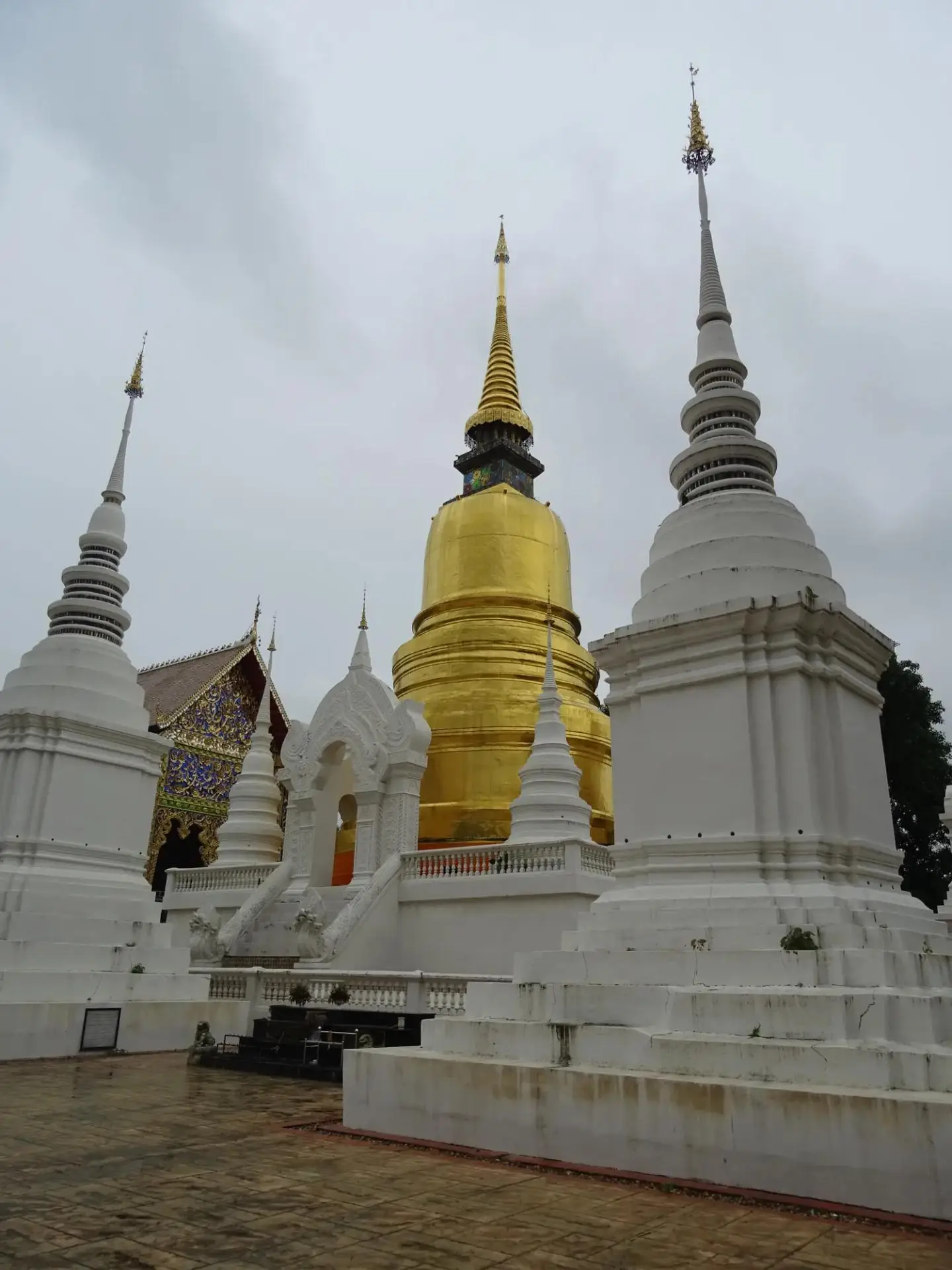
The white chedis are the star. This gleaming cluster of whitewashed mausoleums holds the ashes of the Chiang Mai royal family, gathered here in the early 1900s at the request of Princess Dara Rasmi. Against the mountain at sunset they're pure magic — bring a camera.
In the middle rises the big golden chedi — a bell-shaped, Sri Lankan-style stupa about 48 metres tall, said to enshrine a relic of the Buddha.
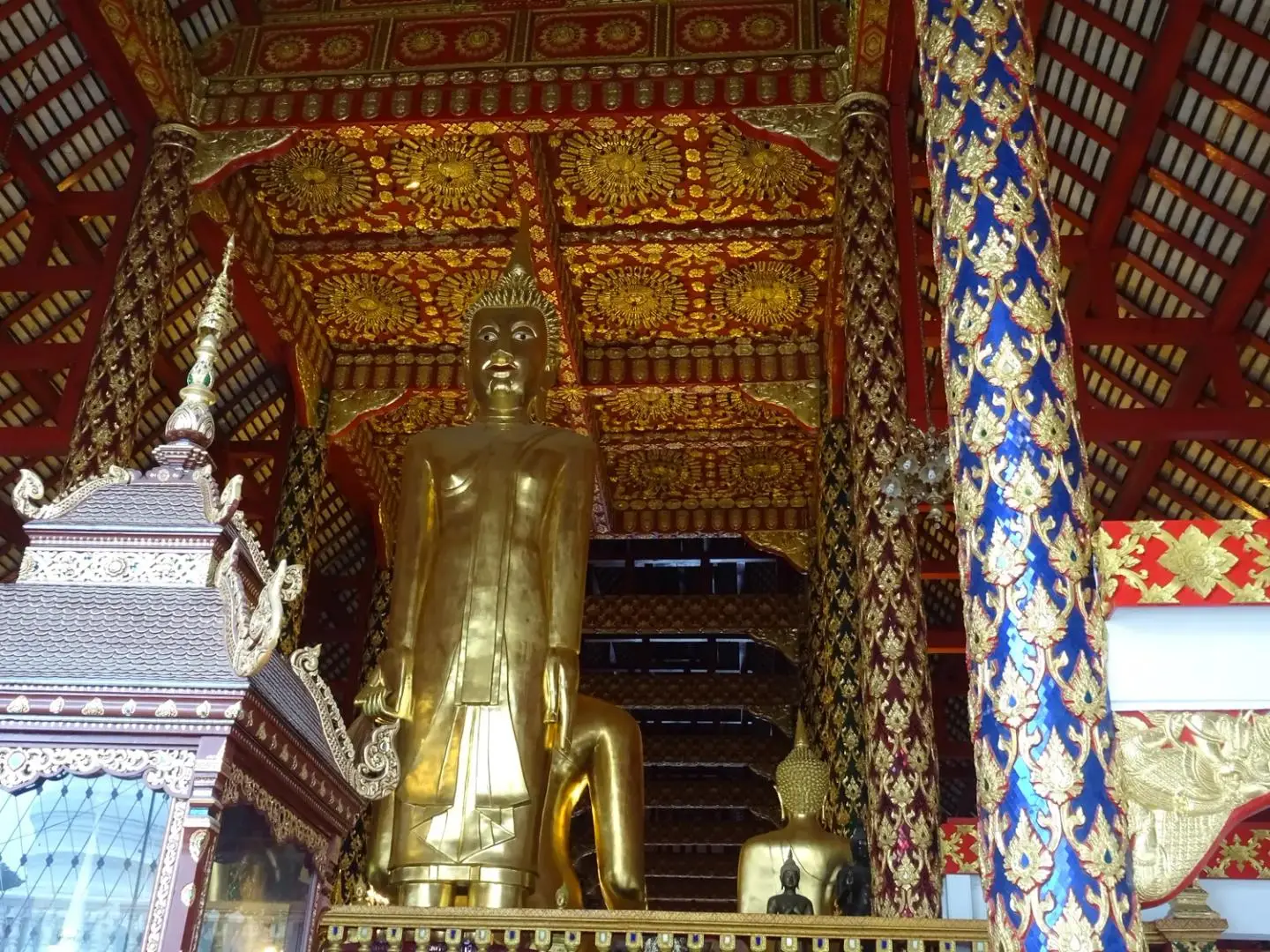
There's also a huge, unusually open-sided assembly hall — airy and breezy — and a giant seated bronze Buddha, Phra Chao Kao Tue, cast back in 1504 and nearly five metres tall.
Wat Suan Dok is also home to a Buddhist university and its well-known "monk chat", where you can sit and talk with student monks keen to practise their English — it's free, and runs on weekday afternoons.
Know before you go
The grounds are free to wander; there's a small fee (around 20 THB) for foreigners to go inside the main hall.
It's open daily from 6am to 6pm. Come in the late afternoon, when the golden light hits the white chedis — it's the loveliest time to be there.
Dress respectfully: shoulders and knees covered, and shoes off before you step into the halls. Half an hour to 45 minutes is plenty.
While you're out here
You're on Suthep Road, the run west out of the city. Nimman's cafés are about a kilometre back toward the moat, the forest-and-tunnel temple Wat Umong is a couple of kilometres further on, and this same road carries on up to Doi Suthep if you fancy the mountain. Easy to link up on a scooter.
Quick questions
Where is Wat Suan Dok?
On Suthep Road, about a kilometre west of Chiang Mai's Old Town moat — an easy scooter ride out toward Nimman and Doi Suthep.
How much is the entrance fee?
The grounds are free. There's a small fee (around 20 THB) for foreigners to go inside the main hall; Thai visitors go free.
What are the opening hours?
It's open daily from 6am to 6pm. Late afternoon is the best time, with golden light on the white chedis.
When's the best time to visit?
Late afternoon, when the golden light sets the white chedis glowing and Doi Suthep rises behind them — it's the most photogenic temple in the city at that hour.
What is "monk chat"?
A free, relaxed chance to talk with student monks at the temple's Buddhist university — they practise their English, you learn about Buddhism and Thai life. It runs on weekday afternoons.