
Do you need a license to ride a scooter in Thailand?
The IDP rules, the car-license catch, what a checkpoint stop really looks like — and why the fine is the least of your worries.
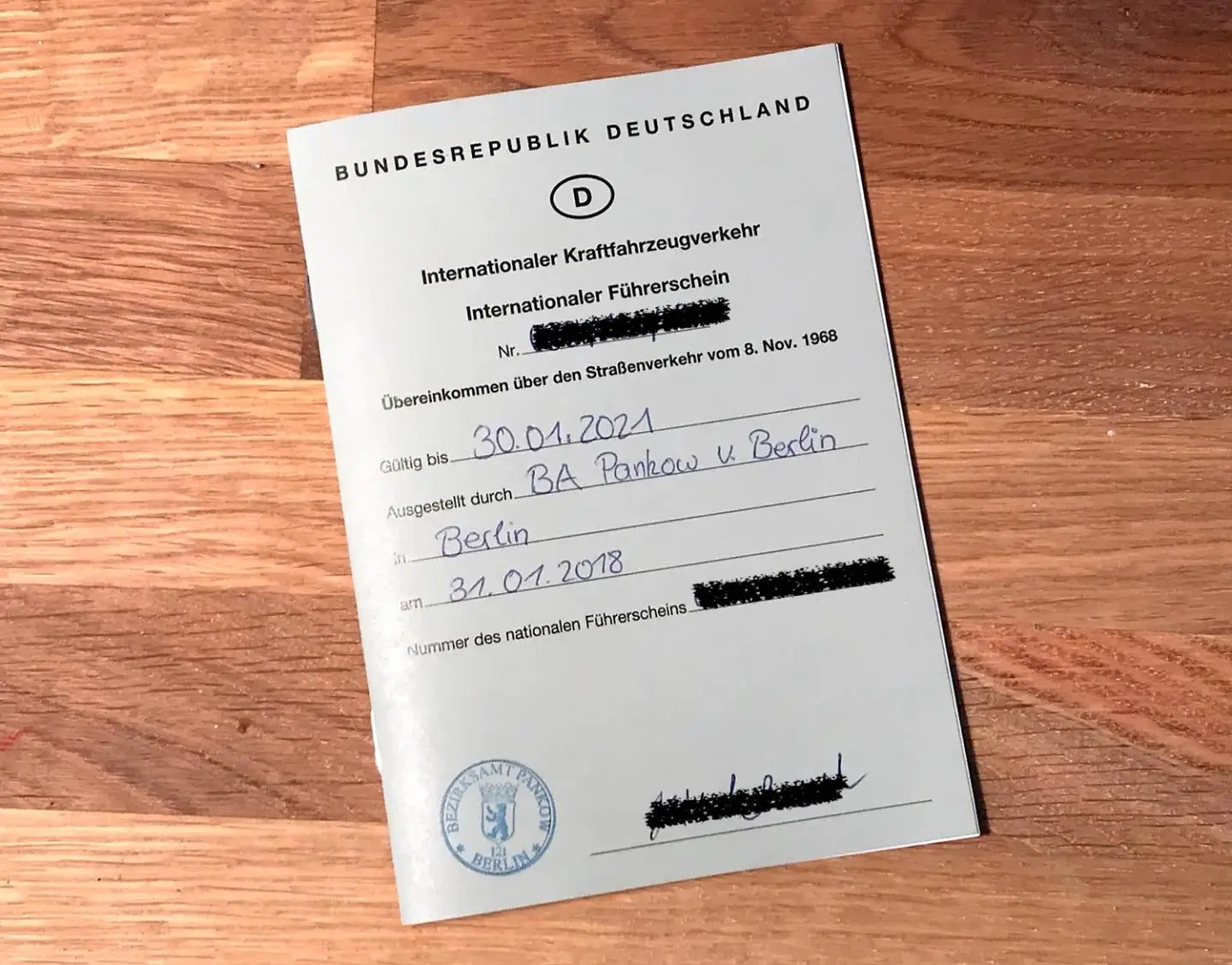
The International Driving Permit — only as good as the license behind it. Photo: Wikimedia Commons (CC0)
It's the question we get more than any other, and most of the answers floating around are half-right. So here it is properly: what actually makes you legal on a scooter in Thailand, what happens at a police checkpoint when you're not, and why the fine is honestly the least of your worries. No scare tactics, no pretending the rules don't exist — just how it works.
What actually makes you legal
Three things count, and only three:
A Thai motorcycle license. The gold standard, no caveats. Note that in Thailand car and motorcycle licenses are completely separate — a Thai car license doesn't cover a scooter.
Your home license + an International Driving Permit with the motorcycle category. This is the tourist route. Thailand accepts IDPs under both the 1949 and (since May 2021) the 1968 conventions — but the IDP is just a translation of your home license, so it only covers what you're licensed for at home. It must be issued in your home country before you travel, and carried together with your original license.
An ASEAN license with a motorcycle category. Licenses from Singapore, Malaysia, Vietnam and the other ASEAN countries work directly in Thailand, no IDP needed.
The catch that gets almost everyone
Here's the part most visitors miss: a car license doesn't cover a scooter — not even a little one. There's no small-engine exemption in Thai law: a 110cc Click is legally a motorcycle, same as a big bike. So if you only hold a car license at home, your IDP only has the car category in it, and on a scooter you're legally unlicensed — IDP or not. The motorcycle (A) category only appears on your IDP if you actually hold a motorcycle license back home. That's the whole game.
If the police stop you
Checkpoints are a normal part of life here — around the moat, on Huay Kaew Road, on the way out to Pai — usually more of them on weekends and holidays, and helmets are what they're scanning for. If you're stopped without a valid license, here's the honest picture: it's a ticket, not a drama. The fine is ฿500, paid at the checkpoint or the nearest station, and your bike and passport are normally not taken. Be polite, pay, move on.
Two things worth knowing. First, the receipt you get works as a pass for the next three days — show it at the next checkpoint and you won't be fined again. Second, helmets got serious: since June 2025 the no-helmet fine is up to ฿2,000 per head — rider and passenger each — and up to ฿4,000 when you're carrying a helmetless passenger. Wear the helmet. We give you two with every bike anyway.
The real risk isn't the fine
A ฿1,000 ticket is an inconvenience. The thing that actually ruins lives is this: if you're not properly licensed, your travel insurance almost certainly doesn't cover you on a scooter. Read any policy: it pays out only if you're licensed for the vehicle both at home and in the country you're riding in — helmet on, engine within the policy's cc limit, sober. Miss any one of those and the whole claim is void: medical bills, evacuation, everything.
This isn't theoretical. Thai hospitals are excellent and not cheap — ICU weeks run into tens of thousands of dollars, and the GoFundMe pages of crashed, uninsured tourists are a genre of their own. The bike's compulsory Thai insurance (Por Ror Bor) exists, but it's a thin base layer — capped at tens of thousands of baht, not dollars — and it never covers the bike or your liability. If you take one thing from this article: sort the license out for the insurance, not for the police.
Staying longer? Get the Thai license
If you're here on a long-stay visa (Non-O, Non-B, ED, DTV…), getting a Thai motorcycle license is a very solvable errand — and it makes every rental, checkpoint and insurance question disappear. The short version for Chiang Mai:
Book a slot at the Land Transport Office on Hang Dong Road through the DLT Smart Queue app (walk-ins usually get turned away; slots run a few weeks out). Bring your passport with the long-stay visa, a residence certificate (from immigration or your embassy) and a medical certificate (any clinic, ฿100–300, issued within 30 days). First-timers do a physical aptitude check, a theory test (45 of 50 to pass, available in English) and a practical course ride; if you hold a valid motorcycle license from home, the practical is skipped — though these days count on doing the theory. You'll walk out with a 2-year license for about ฿105 (all-in with documents, figure ฿600–1,000), renewable into a 5-year one. Bonus: it's valid across all of ASEAN and works as ID for domestic flights.
Quick facts
Minimum age: 15 for small bikes up to 110cc, 18 for a full motorcycle license. Helmets: legally required for rider and passenger. Flip-flops: not actually illegal, but after a crash they hand the insurer one more argument — wear shoes. Alcohol: the general limit is 0.05%, but for new license holders — and anyone unlicensed — it drops to 0.02%, which in practice means don't drink and ride at all. Penalties start at ฿5,000 and go up fast.
For the rest of what renting here involves, our complete scooter rental guide covers it — and once you're on the road, the road safety guide is worth ten minutes of your time.
Quick questions
Do I need a license to rent a scooter in Thailand?
Renting and riding are two different things: most shops will rent to you with just a passport, but to ride legally you need a Thai motorcycle license, or your home motorcycle license plus an IDP with the motorcycle category, or an ASEAN license with a motorcycle category.
Is a car license with an IDP enough for a scooter?
No. There's no small-engine exemption in Thai law — even a 110cc scooter counts as a motorcycle. The IDP only translates what you hold at home, so a car-only license means you're legally unlicensed on any scooter.
What's the fine for riding without a license in Thailand?
฿500, paid at the checkpoint or the nearest police station — and the receipt works as a pass for the next three days. The bike normally isn't confiscated. The bigger issue is that riding unlicensed voids your travel insurance.
Will my travel insurance cover a scooter accident?
Only if you're fully legal: motorcycle-licensed at home, IDP with the A category (or a Thai license), helmet on, within the policy's engine limit and sober. Miss any of those and the claim — medical bills included — is typically void.
How do I get a Thai motorcycle license in Chiang Mai?
With a long-stay visa: book the Hang Dong Road Land Transport Office via the DLT Smart Queue app, bring a residence certificate and a fresh medical certificate, pass the theory test (45/50, English available) and the practical (skipped if you hold a motorcycle license from home). About ฿600–1,000 all-in for a 2-year license.
What's the helmet fine in Thailand?
Since June 2025, up to ฿2,000 each for rider and passenger, and up to ฿4,000 for a rider carrying a helmetless passenger. Every CityGlide rental comes with two helmets.