
Loy Krathong & Yi Peng in Chiang Mai 2026: the honest guide
Lights, krathongs, firecrackers and the truth about sky lanterns — how the festival really works, from someone who walks it every year.
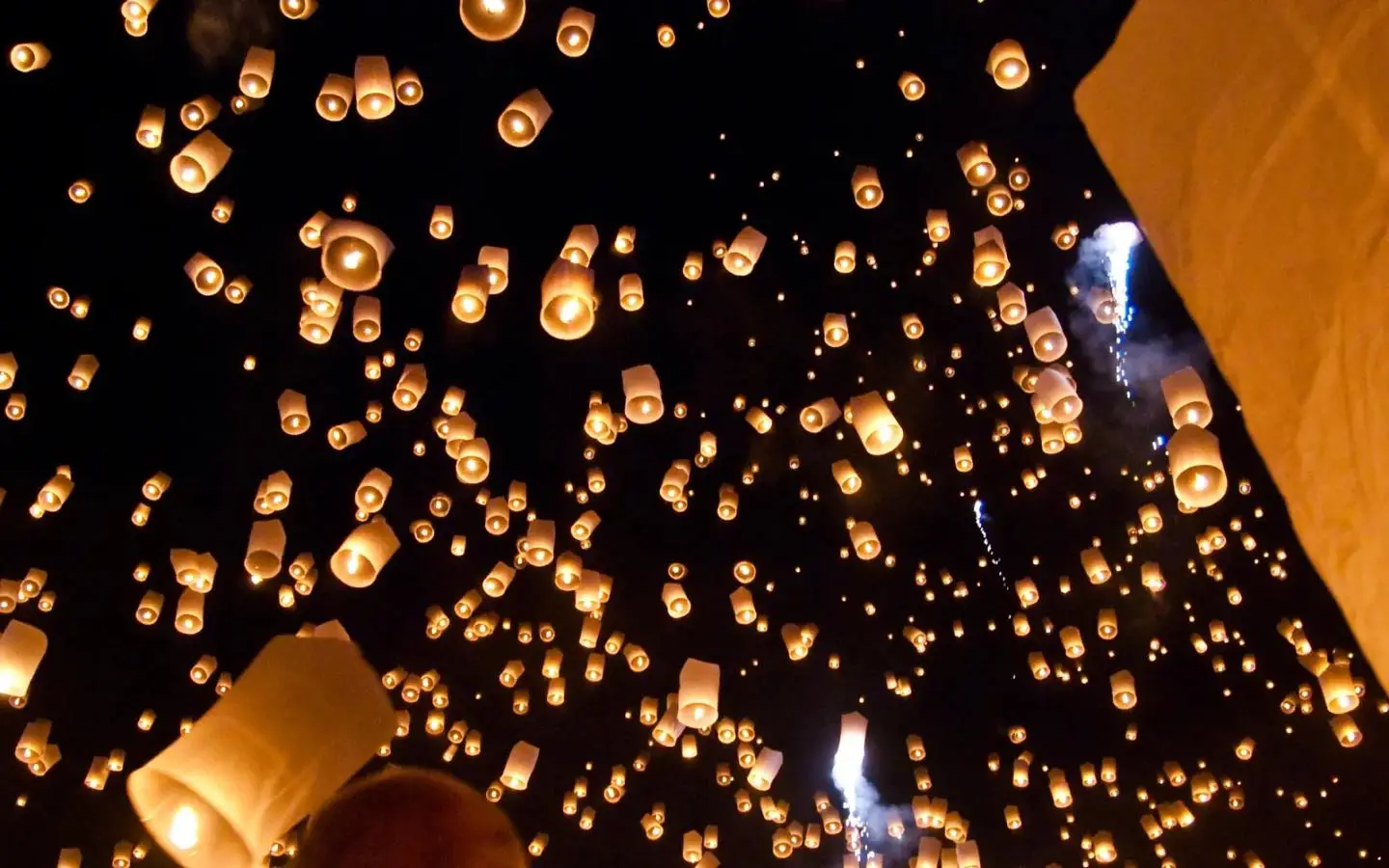
Photo: Takeaway / Wikimedia Commons (CC BY-SA 3.0)
If you only see Chiang Mai once, see it in late November. For three nights the whole city turns into one slow, glowing walk — Tha Phae Road strung with lights, every third stall selling little banana-leaf boats, kids setting off firecrackers at your ankles, and the entire town drifting in the same direction: down to the river. It's loud, it's chaotic, and it's honestly one of the loveliest things you'll ever be part of.
This year it lands on Tuesday 24 November 2026. Here's how the festival actually works, what the deal is with the sky lanterns (short version: not in the city anymore), and how to have a night you'll still be talking about in ten years.
Two festivals, one full moon
What you're seeing is actually two things at once. Loy Krathong is the national one — the full moon of the twelfth lunar month, when all of Thailand floats a krathong (a little boat of banana trunk, leaves, flowers and a candle) on the water to let the year's bad luck drift away. Yi Peng is the northern Lanna version of the same night, and it's the one with the lights: candles on the old city walls, lanterns hanging from every temple, and — famously — paper lanterns rising into the sky. Chiang Mai does both together, which is why it's the place to be for this.
The full moon is 24 November, and the city's programme usually wraps the day before and after, so expect things to be happening roughly 23–25 November — the city publishes the exact schedule in October, and the big parade has lately been on the night after the full moon.
The walk: Tha Phae Gate to the river
Start at Tha Phae Gate around sunset — this is where the whole thing radiates out from. The old brick walls are lined with little clay oil lamps, there's a stage, the moat is already dotted with floating candles, and the crowd is building. Then just follow everyone east along Tha Phae Road. It's maybe a kilometre to the river and it'll take you an hour, in the best way: lights overhead, stalls both sides selling krathongs for ฿20–50 (up to ฿100 for the fancy ones — go for banana leaf or bread, the styrofoam kind is banned), firecrackers and sparklers, grilled everything, and about half the city walking with you.
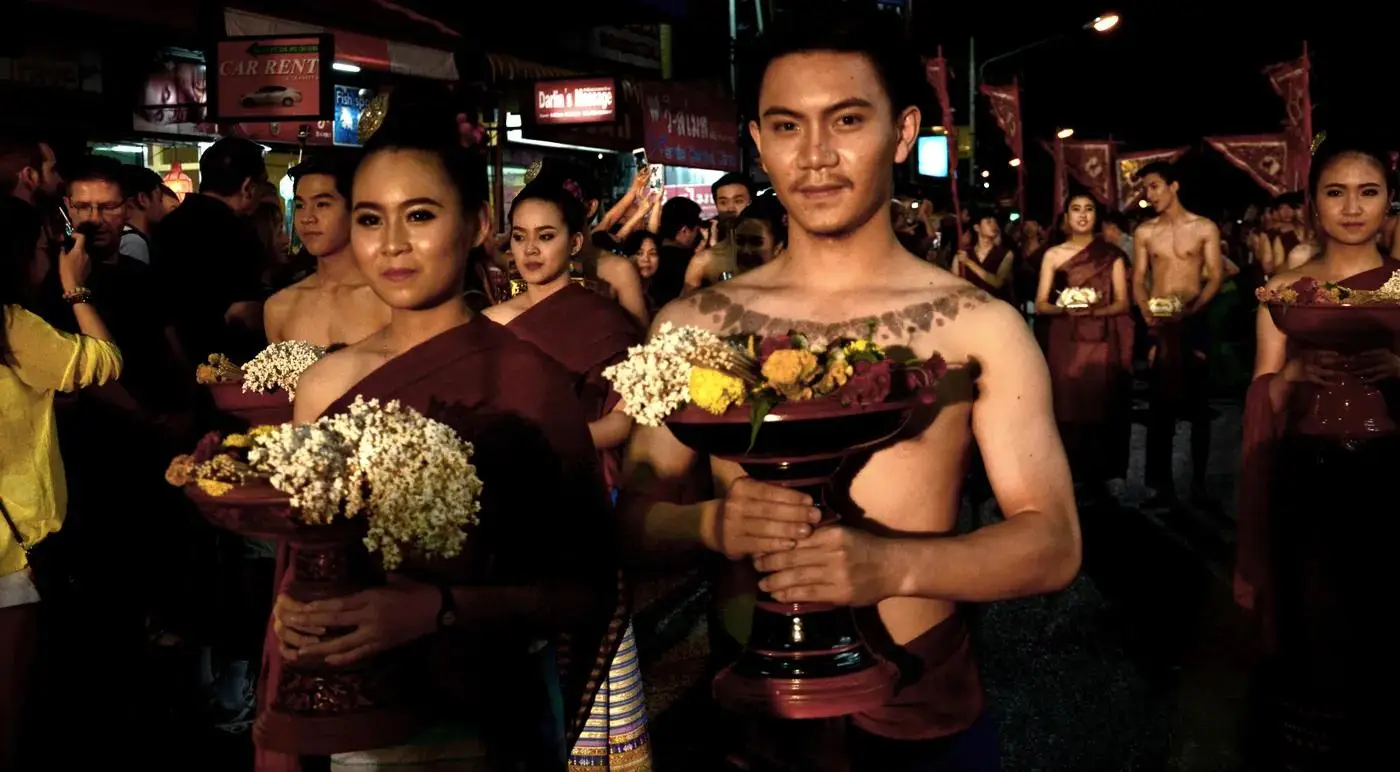
You end up at Nawarat Bridge, and this is the moment. The riverbanks are packed, people are crouching at the water's edge lighting candles, and hundreds of krathongs are already out there, wobbling downstream in a line of tiny flames. Firecrackers go off constantly — not a few, constantly — and somewhere someone always has proper fireworks. The bridge itself gets so full it can take twenty minutes to cross. Let it. Nobody's in a hurry.
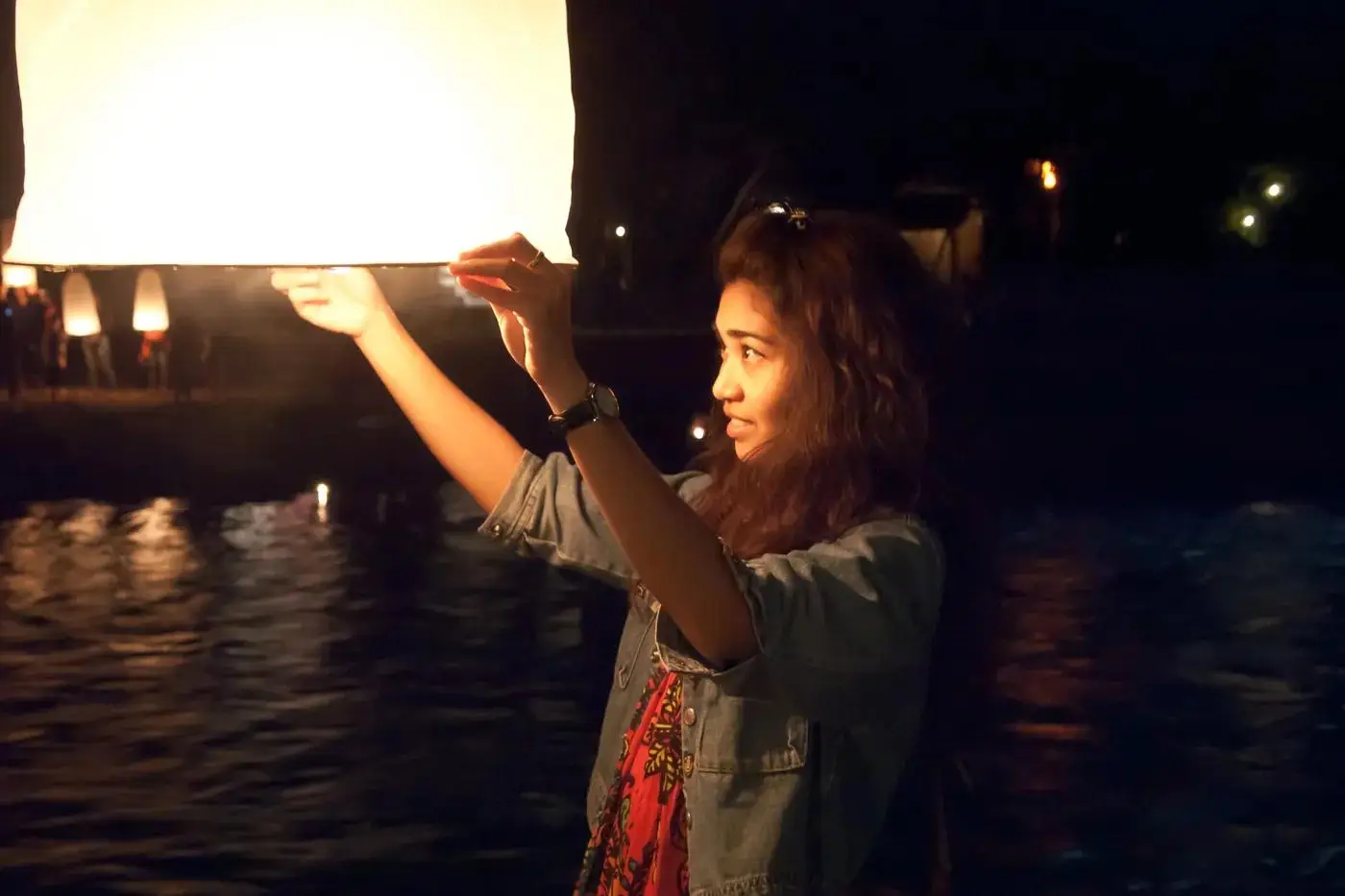
Little tip: the crush is worst right at the bridge. Walk a few hundred metres up or down the bank — towards Wat Chai Mongkhon downstream is where a lot of locals launch, with monks chanting in the background — and you'll get water's edge, a quiet spot to light your candle, and the same view.
About those sky lanterns
You've seen the photos: thousands of lanterns lifting off at once, the sky full of them. So let's be straight about it, because a lot of people arrive expecting to do that on Tha Phae Road, and it doesn't work like that.
Releasing sky lanterns in Chiang Mai city is illegal. The whole of Mueang district — the city, the Old Town, the river — sits in the airport's flight path, and every year the province declares it a no-lantern zone under the Air Navigation Act. The penalties on paper are serious: up to five years in prison and fines up to ฿200,000. The airport still cancels or moves dozens of evening flights on the festival nights because of stray lanterns, which tells you how seriously they take it. Lanterns are only permitted at registered sites well outside the city, and only in a short evening window.
Will you still see the odd lantern over the river? Yes — enforcement isn't perfect and a few always go up. But police patrol Tha Phae Gate, the bridge and the temples on festival nights, and last year the centre was noticeably lantern-free compared to before. We wouldn't. Apart from the legal side, a lantern landing on a wooden roof in a packed city is exactly as bad an idea as it sounds.
If the mass release is your dream — and it is a genuinely magical thing — the way to do it is a ticketed event outside town. The two big ones are the Yee Peng Lanna International at Mae Jo (about ฿4,600–6,400) and the CAD festival at Mae On (฿4,900 up, transfer included), both on 24–25 November; smaller venues around Mae Taeng and Lamphun run for ฿2,500–4,900. They sell out weeks ahead and prices climb from October, so if you want it, book now.
The bits people miss
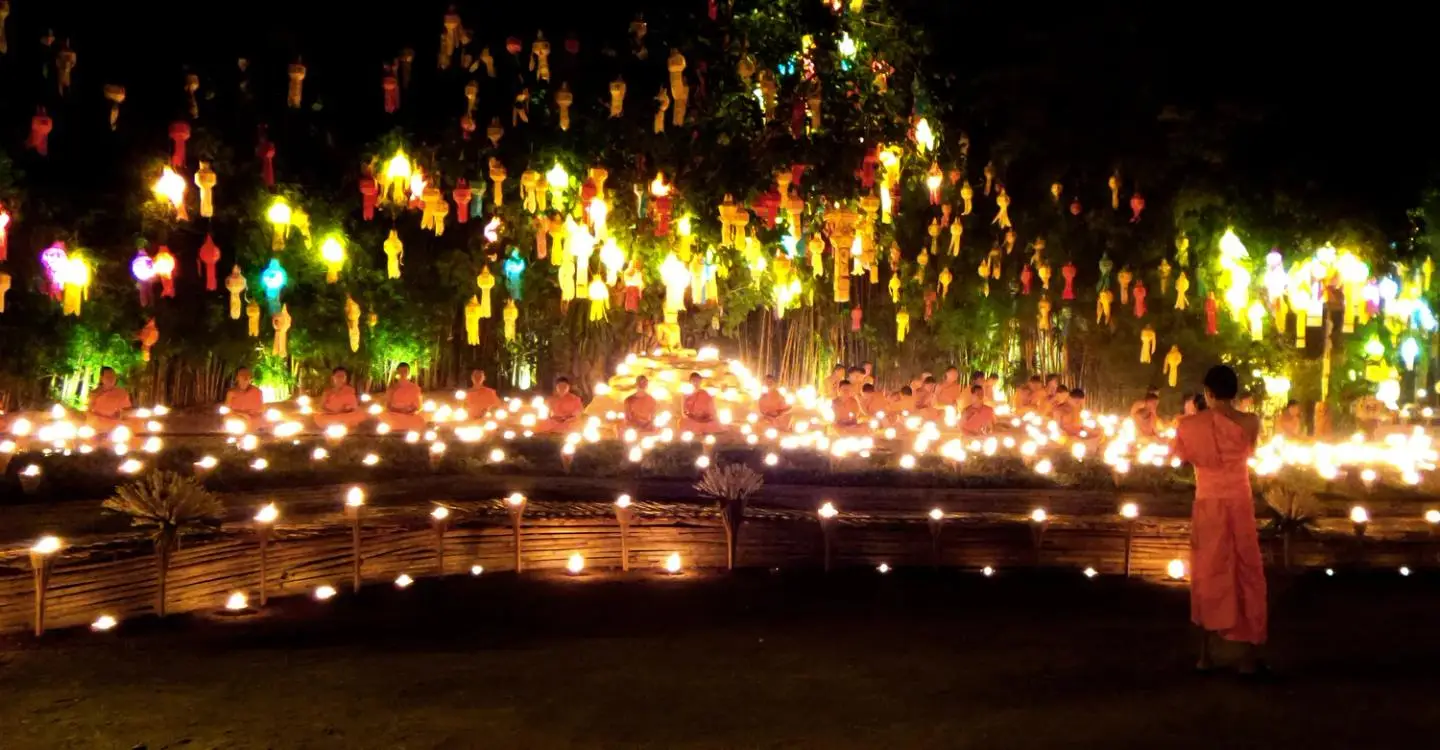
Wat Phan Tao — the teak temple next to Wat Chedi Luang — does a candle ceremony each festival night that's quieter and, for our money, more beautiful than anything at the river: hundreds of candles around a pond, an illuminated Buddha, monks chanting, lanterns in the trees. Go early evening before the river. (Its famous mass lantern release ended after COVID, so don't expect that.)
Three Kings Monument hosts the opening ceremony — hundreds of candle dancers on the square — plus free krathong-making workshops in the evenings. And the parade is the one thing worth planning around: it comes down Tha Phae Road from the gate to the river, around 5–7pm, with the huge lantern floats and beauty queens. Arrive an hour early for a kerbside spot.
Practical stuff, honestly
Flights: don't book anything out of Chiang Mai after about 6pm on 24 or 25 November — evening flights get cancelled or moved every year because of the lanterns, and the airport announces the changes only in late October. Hotels: this is the peak of peak season; Old Town or riverside, booked months out. Getting around: Tha Phae Road effectively closes for the parade, the bridge is a slow-moving crowd, and Grab is hopeless on festival nights. A scooter is the only thing that works — park it near the moat and walk the last bit like everyone else. Kids: wonderful, with one caveat — firecrackers get thrown around carelessly, so keep small ones close near the river.
Last thing: it's a Buddhist festival before it's a spectacle. Light your krathong, make a wish, watch it go, and give the year's junk to the river. That part works whether you believe in it or not.
Quick questions
When is Loy Krathong 2026 in Chiang Mai?
The full moon is Tuesday 24 November 2026, with festivities running roughly 23–25 November. The city publishes the exact programme in October; the grand parade has lately been the night after the full moon.
Can you release sky lanterns in Chiang Mai?
Not in the city — all of Mueang district, including the Old Town and the river, is a no-lantern zone under the Air Navigation Act because of the airport, with penalties up to five years' jail and ฿200,000. Lanterns are only allowed at registered sites outside town, mostly ticketed events at Mae Jo, Mae On and Mae Taeng.
How much are the lantern festival tickets?
The two big mass releases on 24–25 November cost about ฿4,600–6,400 (Yee Peng Lanna International, Mae Jo) and from ฿4,900 (CAD, Mae On, transfer included). Smaller venues run ฿2,500–4,900. They sell out weeks ahead and prices rise from October.
Where's the best place to float a krathong?
Nawarat Bridge is the heart of it — but it's a crush. Walk a few hundred metres along the bank, especially downstream towards Wat Chai Mongkhon where locals launch with monks chanting, for water's edge and a calmer spot with the same view.
Will flights be cancelled during Yi Peng?
Some, yes — the airport cancels or retimes dozens of evening flights on the festival nights because of stray lanterns, announced in late October. Avoid booking flights out of Chiang Mai after about 6pm on 24–25 November.
Is Loy Krathong family-friendly?
Very — the lights, the parade and floating a krathong are magical for kids. The one caveat is firecrackers, which get set off carelessly in the crowds near the river, so keep little ones close there.