
Living in Chiang Mai: everything you need to know
Where to live, what it costs, how to find a place, and the stuff nobody explains — an honest, complete guide to living in Chiang Mai.
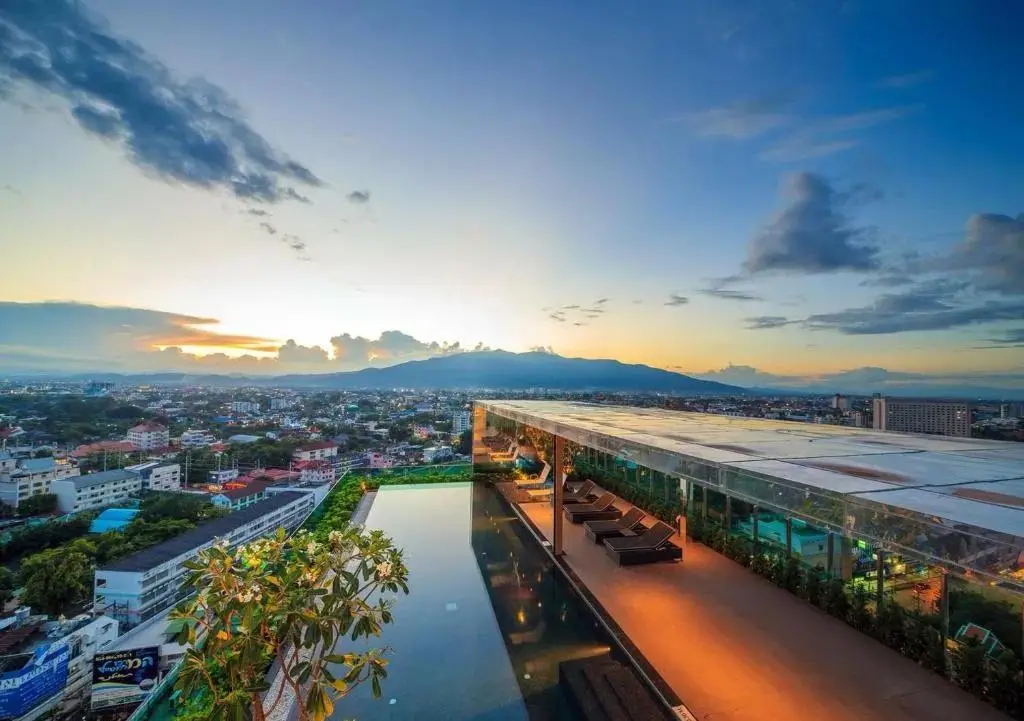
The rooftop pool at The Astra, overlooking the city. Photo: Photomine Studio
Chiang Mai has quietly become one of the best places in the world to post up for a while — cheap, green, easygoing, and full of cafés, coworking and a big international crowd. If you're thinking of staying longer than a couple of weeks, though, finding the right place to live is a whole project in itself.
So here's our honest rundown: where to live, what it actually costs, how to find a place, and the stuff nobody tells you until you're already here. We rent scooters, not apartments — so no sales pitch, just what we'd tell a mate moving over.
Where to live
Chiang Mai is small enough that nowhere is really "far", but each area has its own feel. Here's the quick version, area by area — with a map for each.
Nimman — the modern hub
Nimman (Nimmanhaemin) is the trendy, walkable heart of modern Chiang Mai — cafés, restaurants, the Maya mall, coworking, and the densest cluster of new condos in the city. Popular buildings include Palm Springs, Punna and The Nimmana. As a rough benchmark, a decent studio for one starts around 15,000 THB a month, and a nice two-bedroom from about 25,000 — you'll find cheaper, that's just a solid mid-range. The catch: it's the priciest in-town area, and it can be noisy, with nightlife below and the airport flight path overhead.
The east side (Superhighway) — modern high-rises
Just east of the river, along the Superhighway toward Central Festival, is where a lot of the city's tall, modern condos sit — big buildings with rooftop pools and gyms, and a bit more space for your money than Nimman. The Astra and Astra Sky River are about the most modern high-rises in town, the sort with an infinity pool on the roof; a two-bedroom in that kind of building runs from roughly 25,000–30,000 THB a month.
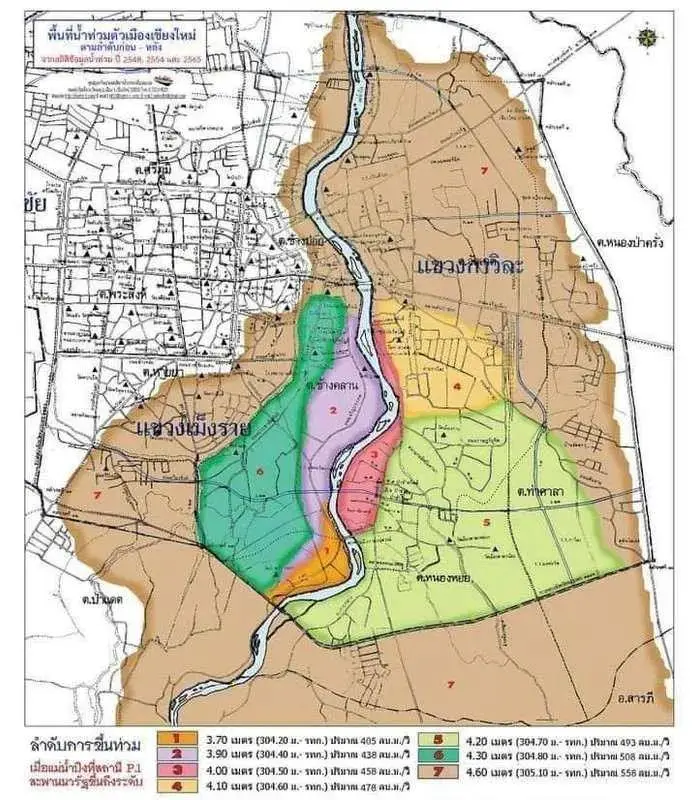
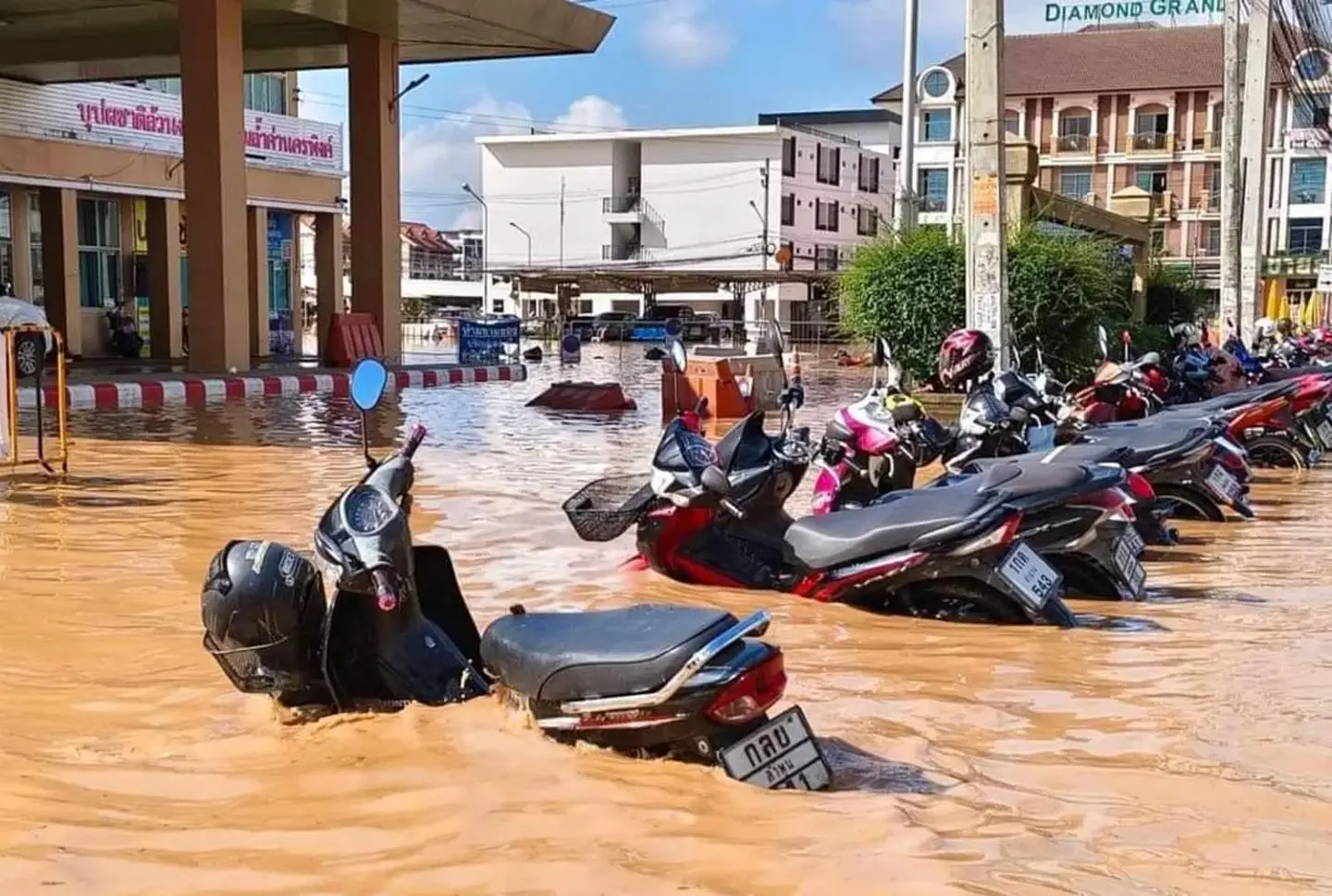
One important thing if you're looking east, or anywhere near the river: floods. Chiang Mai sits on the Ping, and the low-lying strip along both banks floods in bad rainy-season years. The worst recent one was early October 2024, when the Ping hit about 5.3 metres — its highest in roughly 50 years — swamping the riverside markets, the Night Bazaar and Chang Khlan, and the east-bank districts around Faham, Wat Ket and Nawarat. The Old Town and Nimman stayed dry. Risk peaks in September and October. So before you sign anywhere near the Ping, check how close and how low the building sits, favour higher floors, and have a look at the flood map below.
Star Hill and the west (past the airport)
Star Hill, west of the city beyond the airport, is another modern condo that looks great in photos — rooftop pool, smart finishes, prices in the same ballpark as the Astra buildings. Honestly, though, the word we've heard is mixed: it's a fair way out, you can hear the planes, and some residents mention dogs barking at night. Not knocking it — plenty of people are happy there — just go and stay a night nearby before you commit.
South — from the airport down to Hang Dong
More and more people are settling in the south, from behind Central Airport plaza down toward Hang Dong. It's quieter and greener, with gated "moobaan" housing estates, and Hang Dong itself is only about 15 minutes from town. This is the sweet spot if you want a bit of calm — and maybe a garden — without being genuinely far out.
Cheaper options
You don't have to spend Nimman money. A great-value pick is somewhere like Prio, right by the Central Airport intersection — nothing fancy, but a solid condo where a two-bedroom goes for around 13,000 THB a month. At the very bottom, locals rent older one-room condos (think Dome Residence) for as little as 3,000 — just know that some of the older Thai buildings don't rent to foreigners at all, so you'll do most of your hunting in the mid-range.
Renting a house
Prefer a house? Hang Dong is the go-to. Older, nothing-special houses start around 10,000 THB a month; a middle-class house in a newer estate runs about 20,000–30,000 (yes, similar to a condo); and modern pool villas generally start around 60,000 and climb from there. The more you spend, the more you get.
What it costs to run
Rent aside, the running costs are low — but a couple are worth budgeting for.
Electricity is the one to watch. The official rate is under 4 THB a unit, but most condos and apartments re-bill tenants at a flat 6–8 THB, so always ask which you're on. Reckon on roughly 1,000–1,500 THB a month in the cool season, and 2,000–3,000 or more if you run the aircon through the hot months.
Internet is cheap and genuinely fast — from around 400–500 THB a month, with speeds starting at 300–500 Mbps. Water is a rounding error, usually a couple of hundred baht.
How to find a place
This one surprises people: the biggest rental market in Chiang Mai is Facebook. Facebook Marketplace and the local rental groups carry far more listings than any property website — and a lot of it is owner-direct, which means no agent fee and more room to haggle. Even the agencies often post there and nowhere else. Start there.
Rather have someone do the legwork — especially for houses, or if you don't speak Thai? A good agent is free to you (the landlord pays their commission). We've had a genuinely great experience with Perfect Homes.
A few things worth knowing: leases usually run a year, and you'll often get a discount for committing longer — or pay a premium for just a few months. There's normally room to negotiate (an ad at 30,000 might go for 20,000). Move-in cost is typically two months' deposit plus a month up front, though one month's deposit is common too. And an insider tip: sign during burning season (February–April), when demand is low and prices are softest.
Before you sign — the honest bits
A few things that catch newcomers out:
Western kitchens are rare. Even in nice apartments and houses, a proper oven or an extractor hood is a bit of a luxury, and an open-plan kitchen-and-living-room is unusual — if you really want that, you may end up building your own house. Lots of places have just a simple hob, often on a gas bottle, and that's it.
If you do decide to build, tread carefully — plenty of people have horror stories about cycling through three different contractors, or a builder who took the money and vanished. Get recommendations, and don't pay too far ahead.
And yes — cockroaches (plus ants and geckos) are part of the deal here. Newer buildings are well-sealed and you can mostly keep them out; older places, less so. Landlords often won't treat non-termite pests, so most renters just handle it themselves.
Buying and owning as a foreigner
Rents are low, but not that low next to property prices — so if you're in it for the long haul, owning (and maybe renting out) can genuinely make sense. Just know the rules, because they're strict for foreigners.
You can't own land in Thailand. The usual workaround is a registered lease of the land, and 30 years is the real legal maximum — so treat the "90-year (30+30+30)" leases you'll see advertised with caution, because the renewals aren't guaranteed to be enforceable.
A condo you can own outright, though — that's the clean route. The catch is the foreign quota: no more than 49% of a building's total floor area can be foreign-owned (Thais must hold at least 51%). And the purchase money has to be brought in from abroad in foreign currency, so the receiving bank can issue the form the Land Office needs to register it in your name.
None of this is legal advice — rules and enforcement change and every case differs, so run anything real past a licensed Thai property lawyer before you sign or buy.
Quick questions
How much does it cost to rent in Chiang Mai?
A decent studio runs about 8,000–15,000 THB a month, a two-bedroom condo around 20,000–25,000, and a modern place with a rooftop pool from roughly 25,000–30,000. Houses range from about 10,000 for an older one to 60,000+ for a modern pool villa.
Where's the best area to live in Chiang Mai?
Nimman for the modern, walkable café scene; the east-side high-rises for pools and space; and the south toward Hang Dong for quieter house living. Santitham and the Riverside are good-value in-town alternatives.
Which areas of Chiang Mai flood?
The low-lying strip along the Ping River — the riverside markets, the Night Bazaar/Chang Khlan area, and the east-bank districts around Faham and Wat Ket. The Old Town and Nimman stayed dry in the big October 2024 flood. Risk peaks in September–October.
How do I find a rental in Chiang Mai?
Facebook — Marketplace and the local rental groups — has the most listings, much of it owner-direct with no agent fee. Agents (free to renters) are handy for houses; we rate Perfect Homes. Leases are usually a year.
Can foreigners own property in Chiang Mai?
You can't own land, but you can own a condo outright — as long as no more than 49% of the building's floor area is foreign-owned, and you bring the purchase money in from abroad. For land or houses, foreigners use a 30-year registered lease. Always check with a Thai lawyer.
What are utility costs like?
Cheap. Internet from around 400–500 THB (300–500 Mbps), water a couple of hundred baht, and electricity roughly 1,000–3,000 a month depending on aircon — note many buildings re-bill power at 6–8 THB a unit.