Is Chiang Mai safe? An honest answer from people who live here
Crime against visitors is rare here and the scams are mild. What actually hurts people is the road, and for six weeks a year the air. The numbers for 2024 to 2026, and what we would do about each risk.
Yes. Chiang Mai is one of the safest cities you are likely to visit, and we say that as people who live here and walk home at night without thinking about it. Violent crime against visitors is rare, the scams are mild by Thai standards, and nobody is going to bother you in the street.
That is the true answer, but it is not the useful one. The useful answer is that two things here do hurt visitors, every week of the year, and neither of them is crime. One is the road. The other, for about six weeks every spring, is the air. The rest of this page goes through each risk in the order it actually matters, with the numbers and with what we would do about it.
The short version
- Crime: low. Watch your bag in markets and your drink in bars, as you would anywhere.
- Roads: the real risk. Thailand's roads are among the most dangerous in the world for people on two wheels.
- Air: bad to very bad from late February to mid-April; fine the rest of the year.
- Weather: the Ping River flooded the east side of town in 2024; storms from May to October are short and local.
- Laws: vapes are illegal, cannabis needs a prescription, and criticising the monarchy is a serious crime.
- Health: good private hospitals, no drinkable tap water, dengue in the rains, and street dogs that occasionally bite.
Crime: low, and mostly boring
Chiang Mai is a university town of temples and coffee shops, and it behaves like one. People leave helmets hanging on parked scooters and laptops on café tables. The British government's advice for Thailand says that violent crime "rarely involves tourists", and in the north that matches what we see. Walking in the Old Town or Nimman at midnight feels the way a small European city feels at 21:00.
What does happen is petty and opportunistic:
- Bag and phone snatching, sometimes from a passing motorbike. Carry your bag on the side away from the road and do not ride with a phone in your hand.
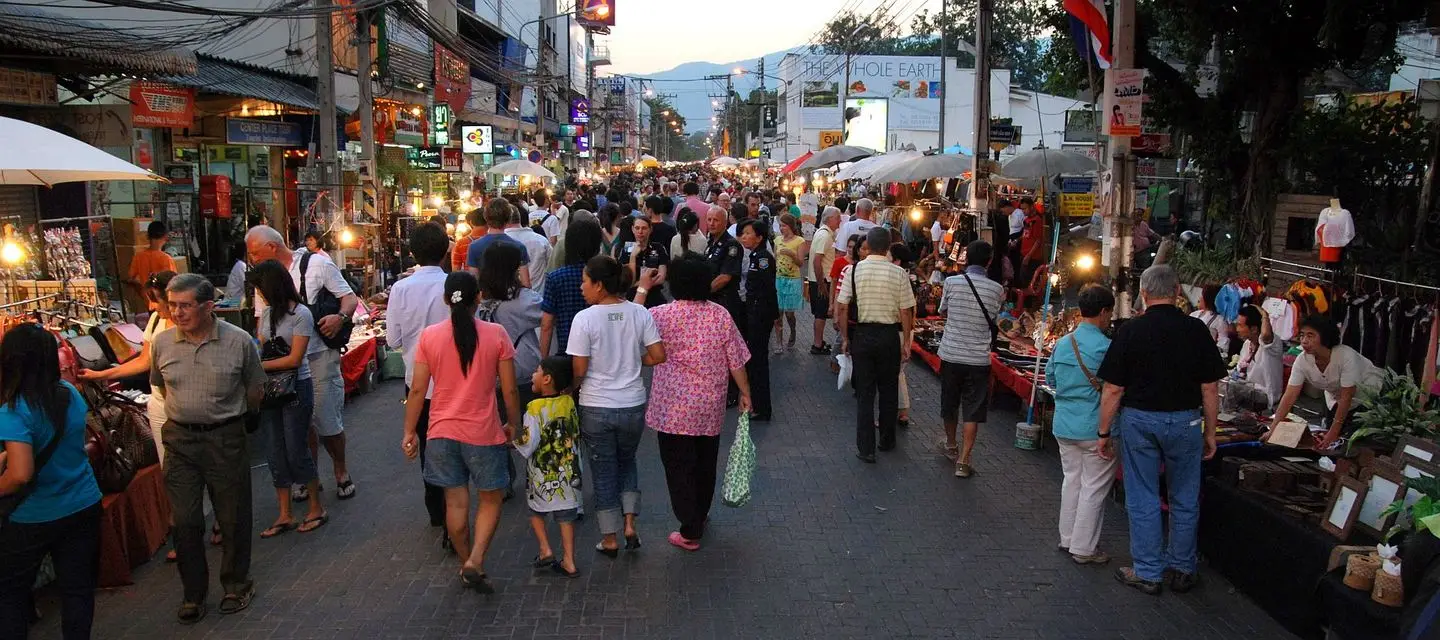
- Pickpocketing in crowds: the Sunday walking street, the Night Bazaar, Songkran. A zipped pocket solves it.
- Card skimming. Use cash machines attached to a bank branch or inside a mall.
- Late-night bar trouble. Drink spiking does happen in Thailand, to men as well as women. Keep your glass in sight and leave with the people you came with. Most trouble involving foreigners starts late and involves alcohol.
Scams
Compared with Bangkok or the islands, Chiang Mai has very few. The ones worth knowing:
- The inflated ride. A tuk-tuk at a tourist spot will quote two or three times the going rate. Agree the price before you get in, or use a ride-hailing app such as Grab or Bolt and skip the conversation.
- "It is closed today." A friendly stranger tells you the temple or market you are walking to is shut and offers to take you somewhere better. It is not shut. Smile and keep walking.
- The passport deposit. Some scooter rental shops ask to keep your passport, and a few then find "damage" when you come back. Never leave your passport with anyone; the British government says the same in so many words. A reputable shop does not need it. Photograph the bike from every side before you ride away, wherever you rent. There is more on this in our complete scooter rental guide.
Solo travellers and women
Chiang Mai is one of the easier places in Asia to be on your own. Street harassment is uncommon, the city is full of women travelling and living alone, and there is always a café open and a ride ten minutes away. The sensible precautions are the universal ones: watch your drink, do not walk long dark stretches alone after the bars close, and tell someone where you are going if you head into the hills.
The roads: the risk that is real
Here is the number. In 2024, 17,447 people died on Thailand's roads, according to the Department of Disease Control, and 14,144 of those deaths involved a motorcycle. That is four in five. The World Health Organization puts the country's road death rate at about 25 per 100,000 people a year; in the UK or Germany it is 3 to 4.
Holidays are worse. During the seven days of Songkran in April 2026, 242 people died in 1,242 crashes nationwide, and Chiang Mai province led the whole country for drink-driving cases, with more than 650 in six days.
We rent scooters, so we could be expected to play this down. We would rather you knew it. A scooter is the best way to see this city and the hills around it, and thousands of visitors ride here every month without a scratch. But the people who do get hurt in Chiang Mai are overwhelmingly hurt on the road, and the injuries we hear about are almost all the same three stories: no helmet, alcohol, or a first-ever ride on a mountain road.
The same government figures say 84 per cent of motorcyclists admitted to hospital between 2020 and 2024 were not wearing a helmet. So the risk is not evenly spread. Most of it sits with choices you control:
- Wear the helmet, done up, every time. Passenger too. The fine is up to ฿2,000 per head, and it is the least of your worries.
- Do not ride after drinking. Not after two beers. Take a ride home and collect the scooter in the morning.
- Hold a motorcycle licence. Without one the checkpoint fine is ฿500, with a receipt that covers you for three days. Much more important: without one, your travel insurance will very likely refuse to pay your hospital bill. The licence rules are here.
- Ride slowly and expect the unexpected. Cars pull out, pickups overtake on bends, dogs sleep in the road. At 40 km/h these are annoyances. At 80 they are accidents.
- Stay off mountain roads after dark and in heavy rain, and take your first day in the city to get used to riding on the left.
- If you have never ridden before, a Thai mountain road is not the place to learn. Take a lesson first, or take a songthaew.
Our longer guide to staying safe on a scooter in Thailand covers the traffic habits that surprise newcomers. If you would rather not ride at all, that is a perfectly good decision, and ride-hailing here is cheap.
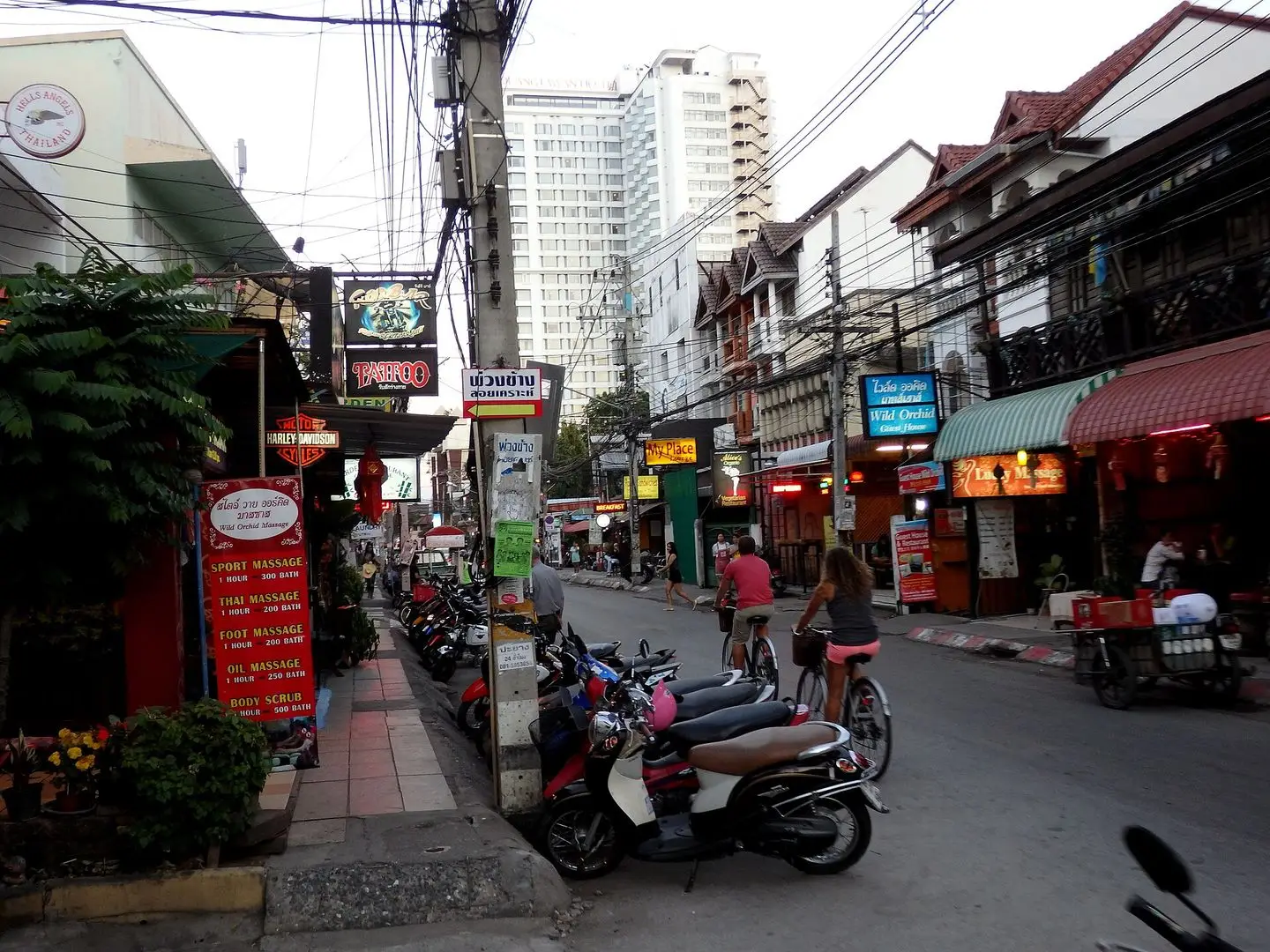
One more thing about roads: crossing them. Drivers do not stop for pedestrians at zebra crossings unless there is a signal, and sometimes not then. Look right first, then left, then right again, and cross when there is a gap rather than when you have the right of way.
The air: six bad weeks
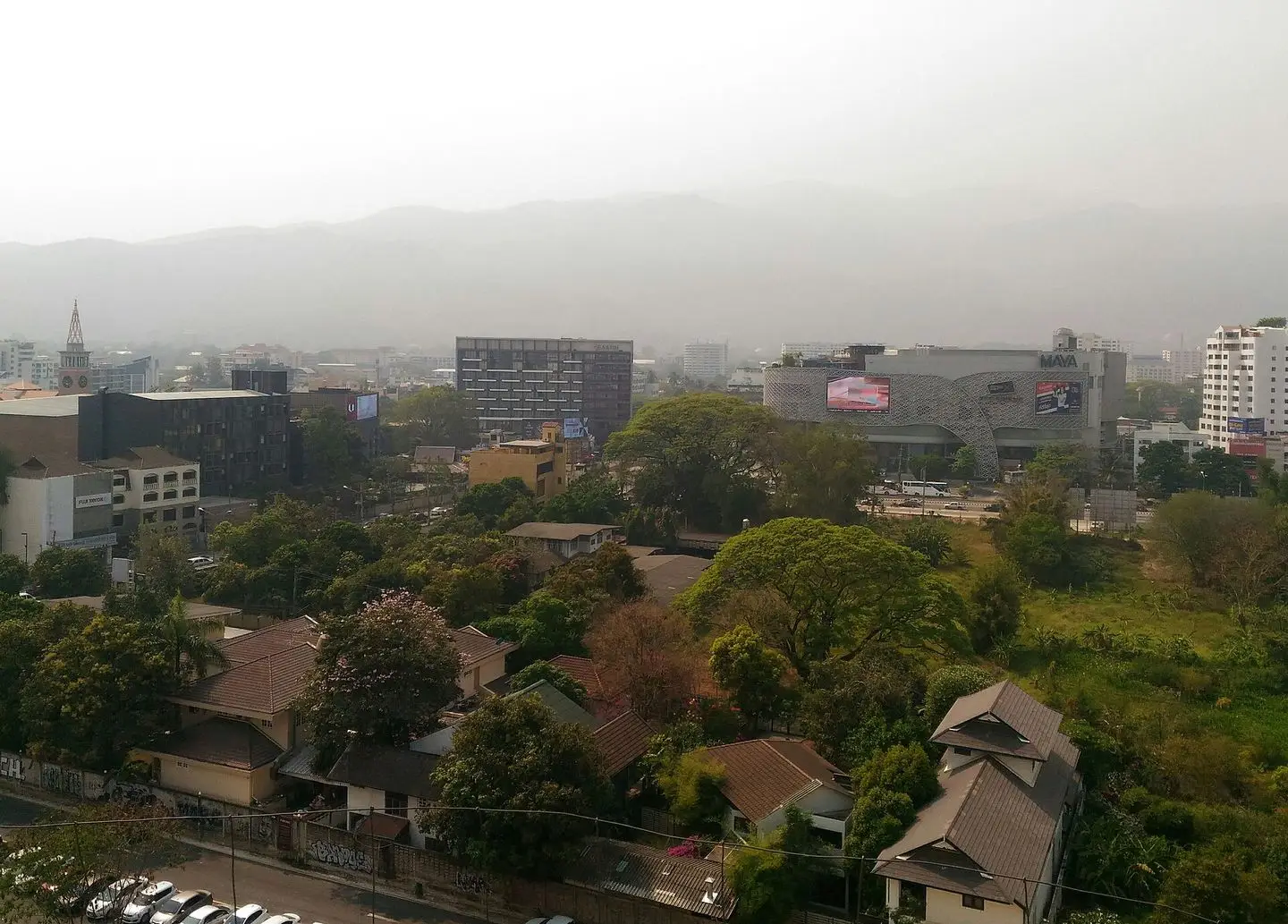
From late February to the middle of April, farmers and forest fires across northern Thailand, Myanmar and Laos fill the valleys with smoke. Chiang Mai sits in a bowl and collects it. In 2026 the air-quality company IQAir ranked Chiang Mai the most polluted major city in the world on several days between late March and early April, with readings above 230 on its index. The mountain you came to see disappears, your eyes sting, and locals who can leave, do.
It is a health question more than a safety one, and how much it matters depends on you:
- Healthy adult, a few days: unpleasant, not dangerous. Wear an N95 mask outdoors (sold in every pharmacy and convenience store), book a room with an air purifier, and plan indoor days when the reading is high.
- Asthma, heart or lung conditions, pregnancy, small children, older travellers: we would honestly pick another month, or go south.
- Everyone: check IQAir's live reading for Chiang Mai before you book anything in March. The season usually ends with the first proper rains, in late April or early May.
From May to January the air is clean, and the cool season from November to January is clear and bright.
Floods, storms and the occasional tremor
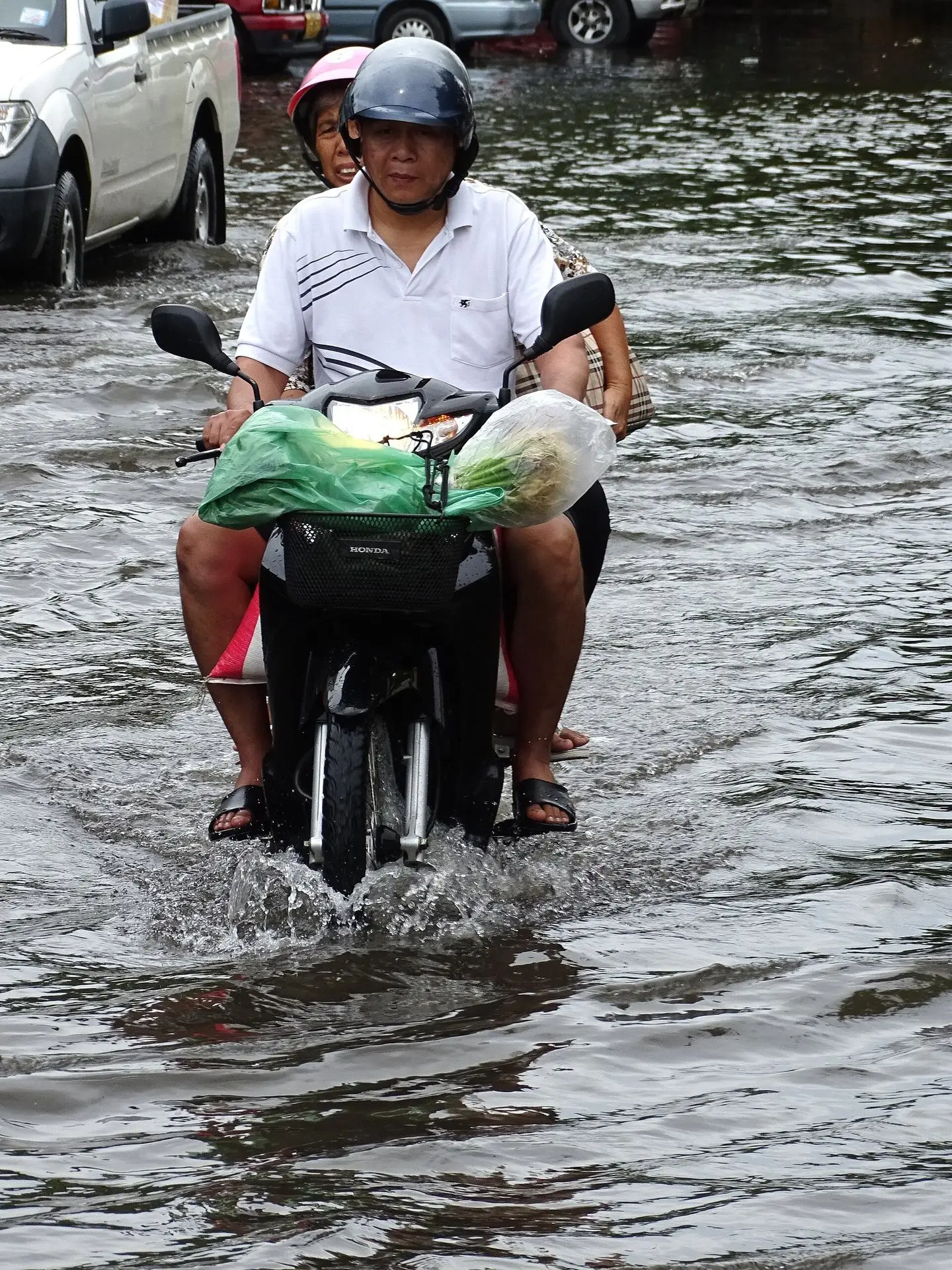
The rainy season runs from about May to October. Most of it is harmless: a hard shower in the late afternoon, an hour under a café roof, wet roads. A few low streets hold knee-deep water for an hour after a big storm and then drain. On a scooter, wait it out rather than ride through water you cannot see the bottom of (more on riding in the rains).
The exception was 2024. After weeks of rain upstream the Ping River broke its banks twice, reaching a record 5.30 m at the Nawarat Bridge in early October. The Night Bazaar, Chang Khlan Road and Warorot Market were under about a metre of water for days. The Old Town and Nimman, on higher ground to the west, stayed dry. If you visit in September or October, a hotel west of the river is the cautious choice, and the news will tell you days in advance if the river is rising.
Waterfalls and caves in the hills can flood quickly after heavy rain; if a park ranger says a trail is closed, it is closed for a reason.
Northern Thailand also gets earth tremors. The big Myanmar earthquake of March 2025 was felt strongly here and cracked some buildings. There is nothing to do about this except know that it happens.
Laws that catch visitors out
Thailand feels relaxed, and mostly is. Three laws are not:
- Vapes are illegal. Possessing or using an e-cigarette, pod or heated-tobacco device is an offence, with fines typically between ฿5,000 and ฿30,000 and no exception for tourists. Leave it at home.
- Cannabis is not the free-for-all it was. Since June 2025 you need a prescription from a Thai-licensed practitioner to buy or carry it, and recreational use is illegal again. The green shop signs are still there; the rules behind them have changed.
- The monarchy is not a topic. Insulting or criticising the royal family is a crime with long prison sentences, and that includes what you post online.
Carry a photo of your passport's main page on your phone; police can ask for ID. Dress properly in temples: shoulders and knees covered, shoes off.
Health: what to actually worry about
Hospitals. Chiang Mai has good private hospitals with English-speaking staff, including Chiang Mai Ram and Bangkok Hospital Chiang Mai, and a large university hospital, Maharaj Nakorn, which locals call Suan Dok. They are not expensive by Western standards, but an operation after a road accident is, which is the other reason to have insurance that covers you on a scooter.
Water and food. Do not drink the tap water. Bottled water is everywhere and most accommodation has a filter. Ice in restaurants is factory-made from purified water and is fine. Street food from a busy stall is as safe as restaurant food, often safer; the turnover is the hygiene.
Mosquitoes. Dengue fever circulates in the rainy season and there is no pill for it. The mosquitoes that carry it bite in the daytime, most of all in the early morning and late afternoon. Use repellent.
Dogs. Street dogs are mostly asleep, but they get territorial at night and some chase scooters. Do not kick out at them; slow down, and they lose interest. Rabies exists in Thailand, so if a dog, cat or monkey breaks your skin, wash the wound with soap for several minutes and go to a hospital the same day for the vaccine course. This is routine here and every hospital does it.
Heat. April afternoons reach 38 to 40 °C. Drink more water than you think you need and stay out of the midday sun on a scooter.
Is any part of Chiang Mai unsafe?
No neighbourhood here is dangerous in the way parts of other cities are. The differences are small ones. Loi Kroh Road and the streets around the Night Bazaar have the late bars and the touts. The roads outside the moat are faster and need more care on a scooter than the lanes inside it. The ring roads and the superhighway are where the serious crashes happen.
As for government warnings: there are none for Chiang Mai. In November 2026 the British government's travel advice warns against travel only to four provinces on the Malaysian border and to a 20 km strip along the Cambodian border, where there was fighting in 2025. The first is well over 1,000 km from here and the second roughly 600 km. Check your own government's page before you fly, because these things change.
If something goes wrong
- Ambulance: 1669
- Tourist police (English spoken): 1155
- Police: 191
Save all three in your phone now. If you have a road accident, call 1669 if anyone is hurt, photograph everything, do not sign anything you cannot read, and call the people you rented from before you agree to anything.
So, is it safe?
Safer than the city you came from, very probably, in every way but one. Wear the helmet, do not drink and ride, check the air if you are coming in March, and the worst thing likely to happen to you in Chiang Mai is that you extend your stay. Plenty of people do; some never leave. When you are ready to plan the days, our guide to the best things to do in Chiang Mai is the place to start.
Quick questions
Is Chiang Mai safe for tourists?
Yes. Violent crime against visitors is rare, the city is calm at night and no government advises against travel here. The risks that actually injure visitors are road accidents, mostly on rented scooters, and the smoke haze of March and early April.
Is Chiang Mai safe at night?
Generally yes. The Old Town, Nimman and the night markets are busy and well lit until late. Use a ride-hailing app instead of walking long, empty stretches after the bars close, keep your drink in sight, and do not ride a scooter after drinking.
Is Chiang Mai safe for solo female travellers?
It is one of the easier cities in Asia to travel alone as a woman: street harassment is uncommon and plenty of women live here on their own. The usual rules apply late at night around bars, where drink spiking does happen in Thailand.
Is it safe to ride a scooter in Chiang Mai?
It is the biggest risk you will take here, and it is manageable. Hold a motorcycle licence, wear the helmet done up, never ride after drinking, keep your speed down and avoid mountain roads after dark. About 80 per cent of road deaths in Thailand involve motorcycles.
Is it safe to visit Chiang Mai during burning season?
For a healthy adult on a short trip it is unpleasant more than dangerous: wear an N95 mask outside and sleep with an air purifier. With asthma, heart or lung conditions, a pregnancy or small children, we would avoid March and the first half of April.
Can you drink the tap water in Chiang Mai?
No. Use bottled or filtered water for drinking; it is cheap and sold everywhere. Tap water is fine for showering and brushing your teeth, and ice in restaurants and cafés is factory-made from purified water.
Are there travel warnings for Chiang Mai?
None that single out the city. In November 2026 the British government advises against travel only to four provinces on the Malaysian border and a 20 km strip along the Cambodian border, both hundreds of kilometres from Chiang Mai.